ai•
Generative engines decide who you are, tell them yourself

The deductions made by models can cause significant harm to personal identities as well as those of companies and products.

by Michele Laurelli

Intelligence, creativity, agency, limits, and the human dimensions of artificial intelligence explored without hype.
The deductions made by models can cause significant harm to personal identities as well as those of companies and products.

The largest qualitative study ever conducted: Anthropic interviews half the world to understand real hopes, fears, and expectations about AI.


Why Data Centers are the True Strategic Infrastructure of the 21st Century


Artificial intelligence is changing the way we search for information while eliminating the aesthetic experience of the web. For this reason, I believe we will unfortunately replace websites with empty text fields.

Artificial intelligence approached with scientific rigor, engineering precision, and human depth.

The Global AI Report by NTT DATA reveals a clear picture: experimentation gives way to the creation of measurable value.

If half of web traffic is generated by bots and content is produced en masse by AI, those working with artificial intelligence have only one path: to stand out from the noise.

What happens when your favorite AI coding assistant disappears overnight?


Digital forensics increasingly integrates artificial intelligence to automate the analysis of large volumes of data, enhancing the speed and effectiveness of investigations on texts, audio, images, videos, malware, and IoT devices.


2025, the year that redefined artificial intelligence.

What if a superintelligent coding AI had emerged in 2012 and declared jQuery and PHP “good enough” for all time? In this alternate history, the web never evolves. No React, no component paradigms, no open-source renaissance: only a perfect stagnation masked by machine efficiency. This essay explores how AI, when trained only to imitate the past, can freeze the future. And it asks a chilling question: what if that future isn’t fiction, but our present unfolding in slow motion?

Between ideological rejection and blind automation, the real distinction lies in directing technology instead of being replaced: history, method, and awareness in the use of artificial intelligence.

A technical analysis of why the self-attention architecture makes modern LLMs much more than mere "stochastic parrots."

Draghi's warning about European stagnation concerns not only the number of artificial intelligence models developed but also the very structure of the economy and how we use (or do not use) AI in production processes.

Why the real productive revolution does not come from LLMs.

Why reliability, not capability, becomes the ultimate bottleneck when AI meets the real world.


Exploring the critical importance of private AI infrastructure for organizations requiring absolute control, performance, and intellectual property ownership.

How orchestrated AI agents are transforming complex problem-solving through coordinated autonomy and specialized capabilities.
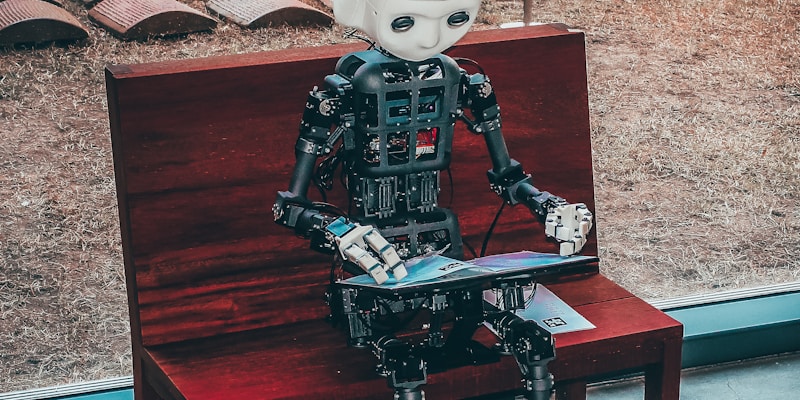
Most organizations don't have labeled datasets. They have processes, constraints, and domain expertise. Here's how to build AI systems that learn from structure, not just examples.

Beyond pattern matching and statistical correlation—exploring what distinguishes true intelligence from sophisticated computation, and why the question matters for how we build AI.

Why my students implement backpropagation by hand, build neural networks from NumPy, and learn to architect systems instead of calling APIs.

Why industrial automation demands AI that runs on-premise, operates without internet connectivity, and makes millisecond decisions in environments where downtime costs millions.

When AI systems trained on AI-generated content degrade over time, losing diversity and capability. Understanding the mechanics of model collapse and architectural solutions that preserve knowledge.

Building Retrieval-Augmented Generation systems that actually understand your organization's knowledge, not just find semantically similar text snippets.

Creativity doesn't emerge from unlimited freedom—it emerges from intelligent navigation of constraints. What this means for building AI systems that generate novel solutions.
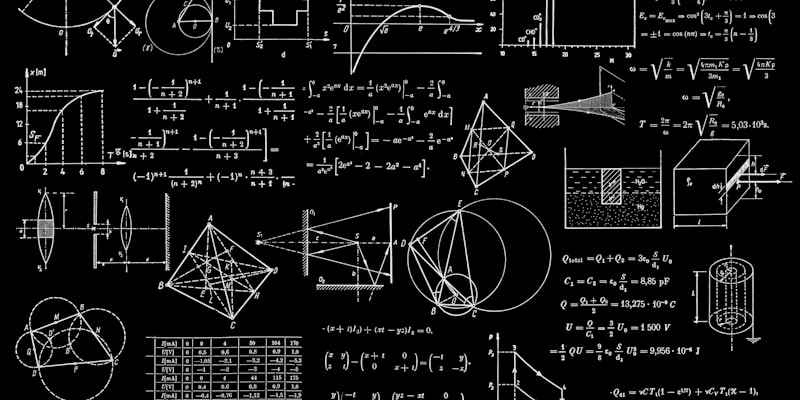
The loss landscape of deep networks is high-dimensional, non-convex, and full of local minima. Yet gradient descent finds good solutions anyway. Understanding why reveals fundamental insights about deep learning.